
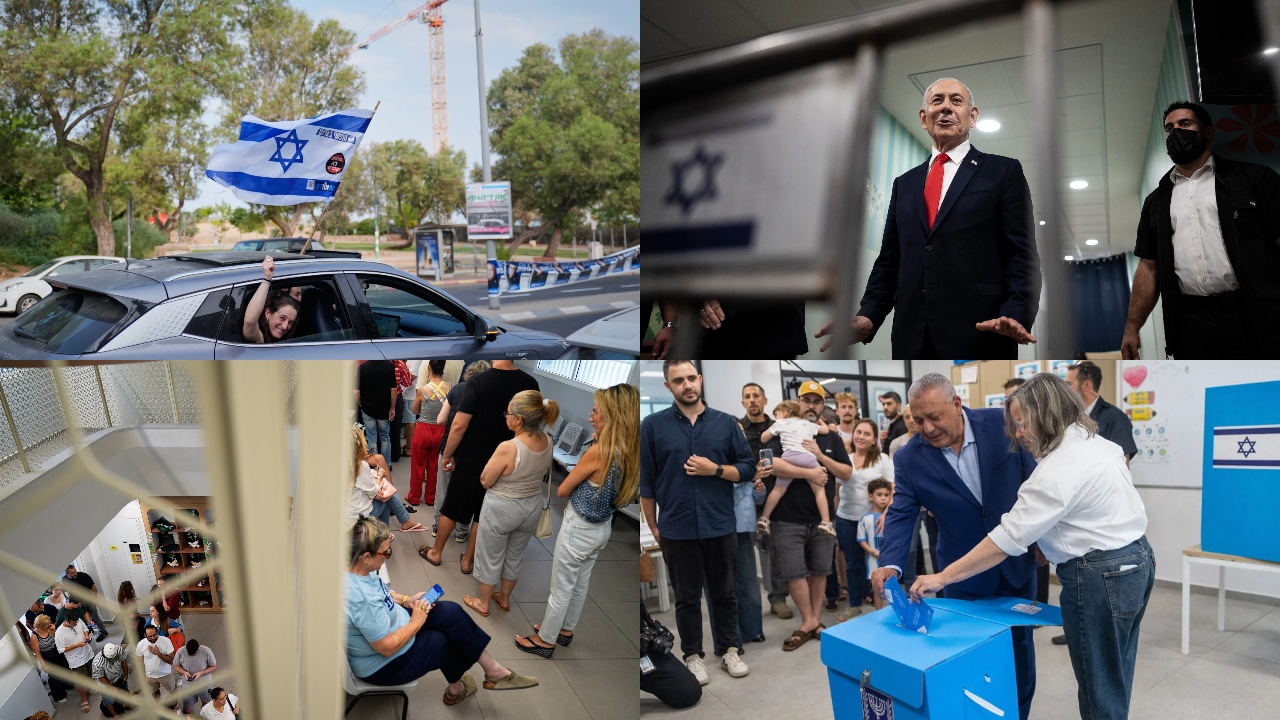
Israel’s political future hangs in the balance as Benjamin Netanyahu faces a high-stakes election battle against opposition leader Gadi Eisenkot, with record voter turnout and a dispute over voting hours adding to the tension.
Israelis have voted in a closely watched parliamentary election that could reshape the country’s political landscape and determine whether Prime Minister Benjamin Netanyahu remains in power after years of war and political controversy.
The October 27, 2026, election is Israel’s first national vote since the Hamas-led attacks on October 7, 2023, which triggered the devastating war in Gaza and subsequent regional conflicts.
Netanyahu, leader of the right-wing Likud party, is facing a major challenge from Gadi Eisenkot, a former military chief of staff who leads the centrist Yashar party. Pre-election polls suggested a tight contest, with neither political camp assured of securing a parliamentary majority.
Record Voter Turnout Raises Pressure on Netanyahu
Voter participation surged throughout Election Day, with Israel’s Central Elections Committee reporting that 55.7% of eligible voters had cast their ballots by 4 p.m. local time. That was the highest turnout recorded by that hour since records began in 1973.
By 6 p.m., turnout had climbed to 66.7%, surpassing the total participation recorded in the previous election before polling stations had closed.
The increased participation among Arab citizens of Israel and voters in liberal strongholds could influence the balance between Netanyahu’s coalition and the opposition, although the final impact will depend on the distribution of parliamentary seats.
The election is being closely watched as a test of public confidence in Netanyahu’s leadership following the security failures surrounding the October 7 attacks and the conflicts that followed.
Election Committee Rejects Request to Extend Voting Hours
Tensions rose after Netanyahu’s Likud party and allied right-wing parties requested an extension of voting hours beyond the scheduled 10 p.m. closing time.
Israel’s Central Elections Committee rejected the request, saying the circumstances did not justify extending voting hours nationwide.
The committee confirmed that voters who had arrived at polling stations by the deadline would still be allowed to cast their ballots, even if they were waiting in line.
Opposition figures criticised the request, arguing that it could provide grounds for challenging the election outcome later. The dispute added another layer of political tension to an already closely contested election.
Netanyahu and Eisenkot Battle Over Israel’s Future
Netanyahu has presented himself as an experienced leader capable of protecting Israel amid regional security threats. His opponents, however, have questioned his handling of the October 7 security failures and called for greater political accountability.
Eisenkot has campaigned on the promise of a different political direction, including changes to military-service exemptions for ultra-Orthodox men and opposition to Netanyahu’s far-right coalition partners.
The election campaign has also been shaped by disagreements over judicial reform, national security and the future direction of Israeli politics.
Despite the devastating war in Gaza and the wider regional conflicts, domestic leadership and questions about government accountability have remained central to the political contest.
Who Will Form Israel’s Next Government?
Israel’s parliamentary system means that winning the largest number of seats does not automatically guarantee the premiership. A party or political bloc must secure enough support to form a governing coalition in the 120-seat Knesset.
As vote counting proceeds, the distribution of seats among smaller parties could prove decisive. If neither Netanyahu nor Eisenkot can assemble a viable coalition, negotiations could prolong political uncertainty.
The final outcome will depend on the official vote count, the number of parties that cross the electoral threshold and negotiations among political leaders.
With record voter participation and Israel facing major security and political challenges, the election could mark a turning point for the country. The key question remains whether Netanyahu can secure another term or whether his opponents can build a coalition capable of replacing his government.